Broadly, I’m interested in how human actions affect populations of freshwater ecosystems. My previous and current research projects fall under these areas:
Juvenile Salmonid Response to Habitat Restoration
Habitat restoration has repeatedly been recognized as a key to maintaining and recovering anadromous salmonid stocks, particularly as climate change changes precipitation patterns and drives increasing summer stream temperatures. However, salmon and steelhead populations have shown highly varied responses to stream restoration. This difference in response might come down to intrinsic differences in physical habitats across watersheds. As a result, different streams likely require restoration plans tailored to the factors most limiting fish production in that location.
We’re monitoring the response of juvenile Chinook and steelhead to determine what elements of restoration programs in the John Day River Basin are most likely to increase smolt production to then guide future restoration work.
Previous Work: Artificial light and stream functioning
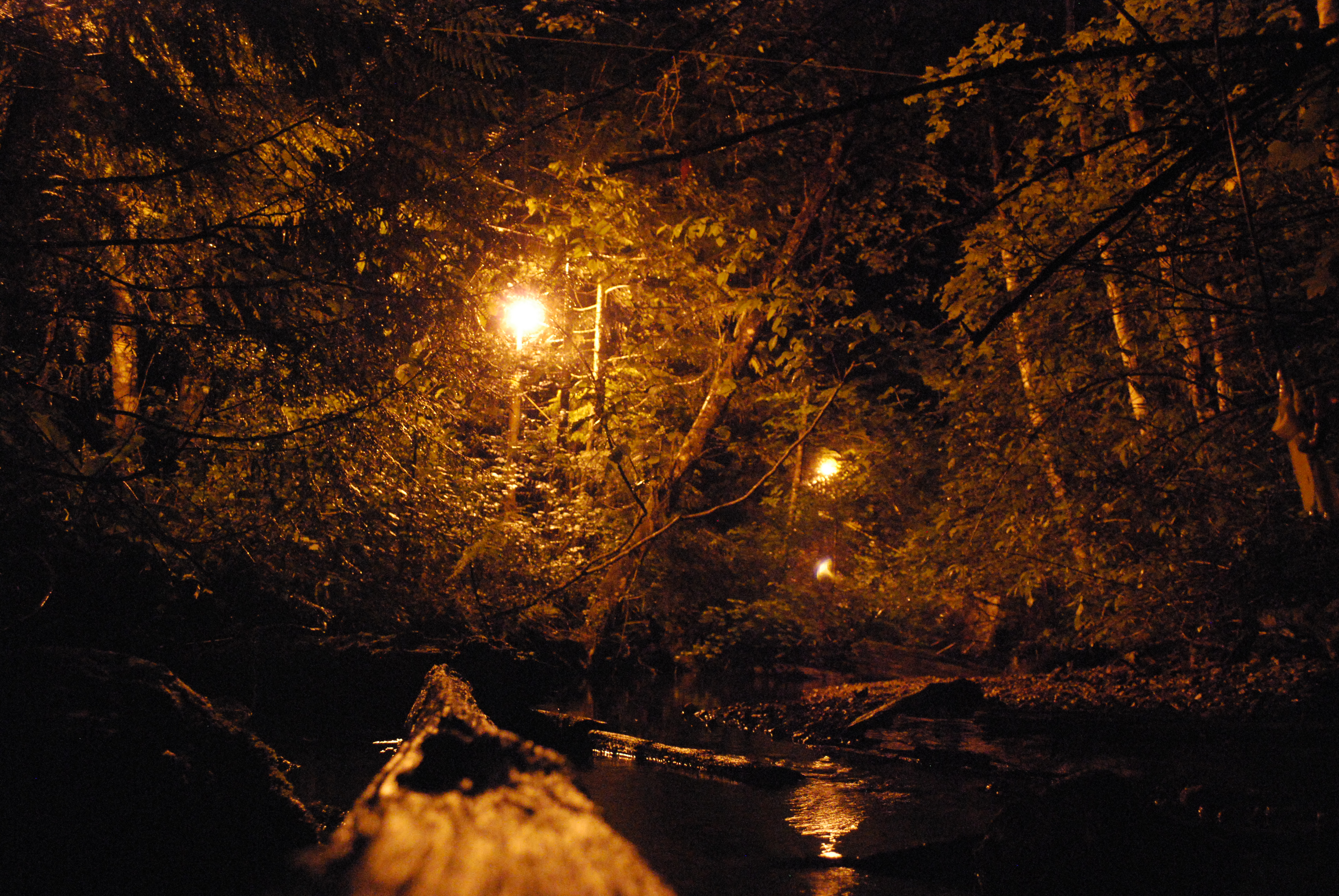
Photo Credit: Nora Schlenker.
Artificial lights, such as streetlights, are ubiquitous in urban areas. However, the potential effects of artificial lights on the ecology of stream systems is just starting to be researched in earnest. Previously, I found that aquatic invertebrate drift is greatly reduced by light levels typical of urban areas. However, some researchers in Europe did not find a strong response by drifting invertebrates to the experimental addition of light to streams. Undergraduate researchers I have mentored, including an interdisciplinary research team and a thesis student, have found evidence suggesting that aquatic insects exposed to light for many generations may adapt to this disturbance.
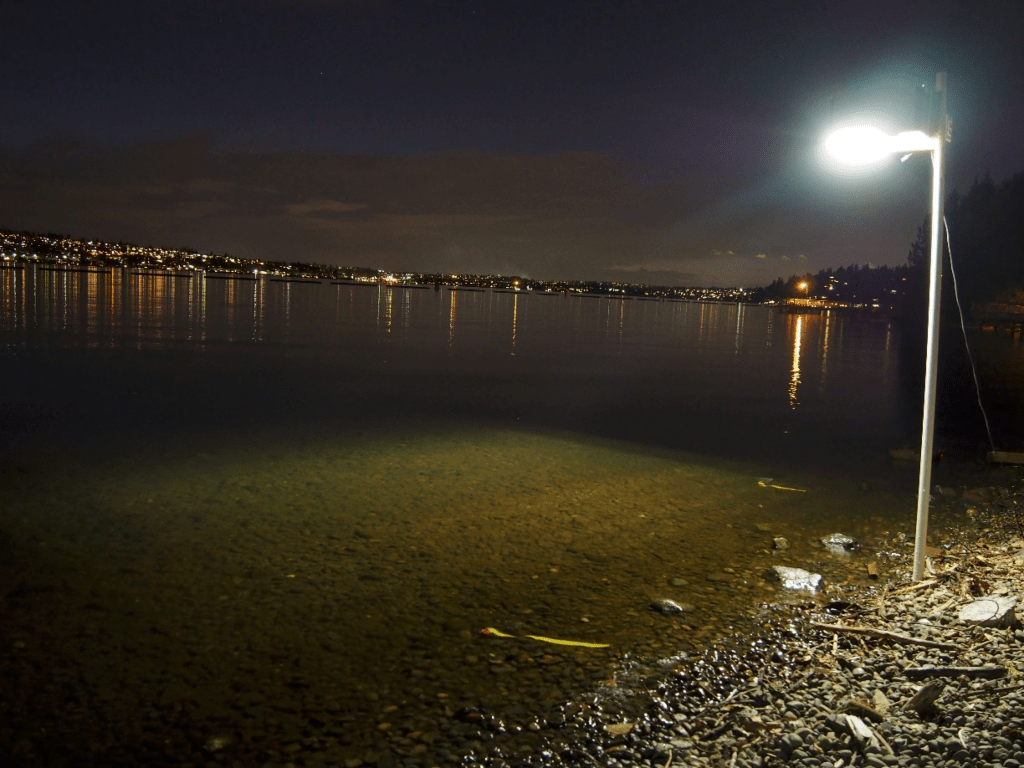
Photo credit: Roger Tabor
 Elizabeth K. Perkin